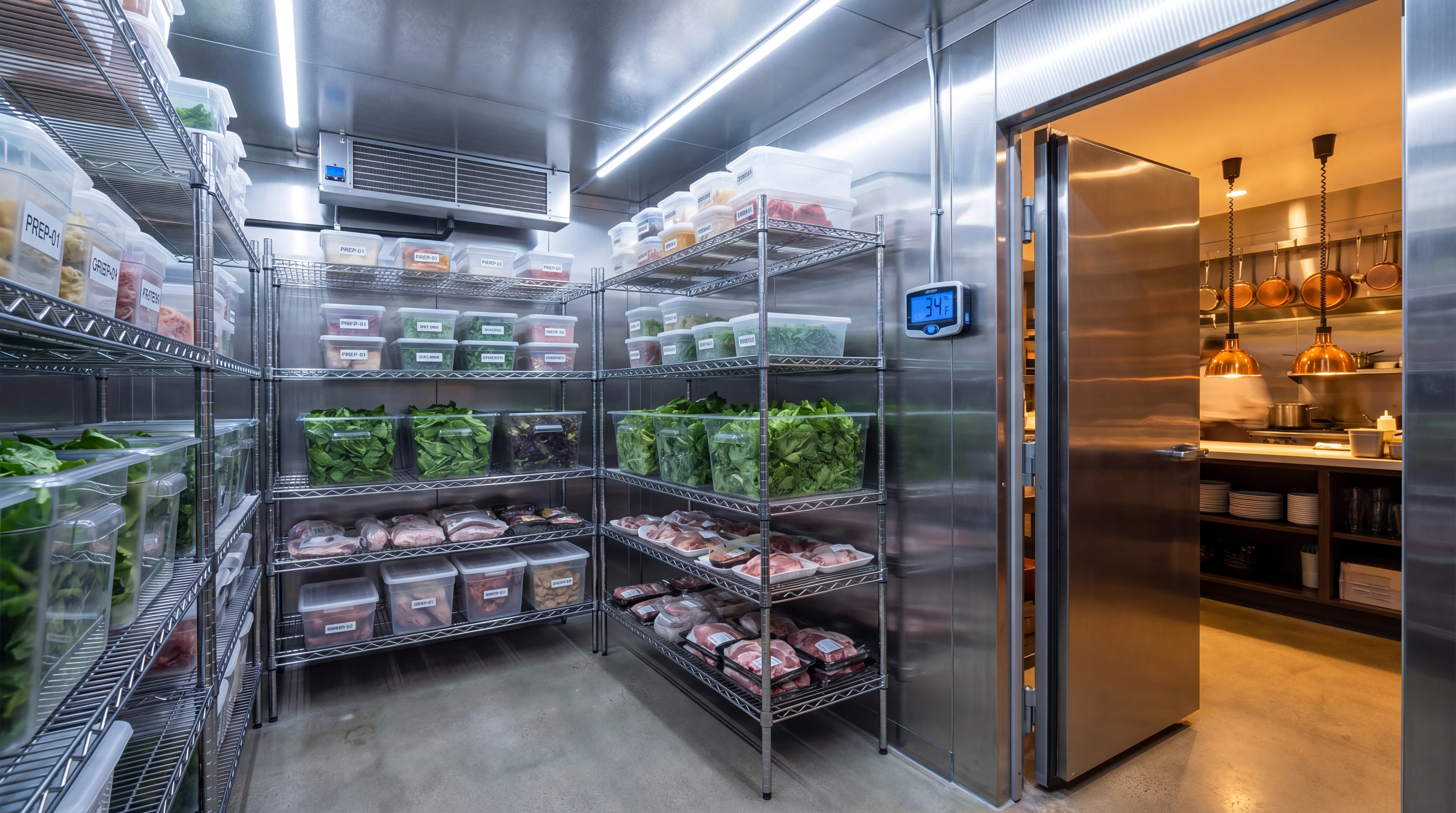
Quick answer: California health inspectors check walk-in cooler temperature (must be 41°F or below per the Retail Food Code), door gasket seals, food labeling and dating, shelf organization, thermometer placement, and overall sanitation. Failing a walk-in cooler inspection can result in immediate food disposal ($2,000-$10,000), fines, reinspection fees of $200-$500, and in severe cases, temporary closure of your restaurant.
California requires all walk-in coolers to maintain 41°F or below under the California Retail Food Code (Section 113996). Walk-in cooler violations are among the most common health inspection failures in Los Angeles County. Temperature control violations account for a significant share of critical citations issued to food facilities each year.
A single failed inspection can mean $2,000 to $10,000 in discarded food, a violation on your public record, reinspection fees ($200-$500 in LA County), and a lower health score that customers check before walking in.
This checklist covers exactly what inspectors look for on your walk-in cooler, the violations that shut restaurants down, and how to pass every time. Based on the California Retail Food Code and 40 years of servicing walk-in coolers across Los Angeles, from Calabasas to Burbank to Oxnard.
What California health inspectors check on walk-in coolers: Temperature at 41°F or below (probed in multiple spots, not just the thermostat), visible thermometer in the warmest zone, door gasket sealing completely, all food covered and date-labeled (7-day max), raw proteins on bottom shelves below ready-to-eat food, no food on the floor (6-inch minimum clearance), no ice buildup on coils, no mold or standing water, and a working emergency release on the door. Failing any critical item can result in $2,000-$10,000 in discarded food and a violation on your public record.
The California Retail Food Code is specific. There's no gray area:
| Item | Required Temp | Notes |
|---|---|---|
| All potentially hazardous foods (TCS foods) | 41°F or below | This is the legal maximum. Not a suggestion. |
| Recommended walk-in cooler setting | 34°F - 38°F | Gives you a buffer when the door opens repeatedly. |
| Walk-in freezer | 0°F or below | Frozen foods must remain frozen solid. |
| Cooling hot food (first 2 hours) | 135°F down to 70°F | Must happen within 2 hours. Don't put hot food directly in the walk-in. |
| Cooling hot food (next 4 hours) | 70°F down to 41°F | Total cooling time: 6 hours max from 135°F to 41°F. |
The inspector checks multiple spots. They don't just look at your thermostat. They probe food temperatures near the door (warmest zone), in the center, and at the back. If ANY reading is above 41°F, it's a violation. Your thermostat can read 36°F while food near a leaky gasket sits at 44°F.
Inspections in California are unannounced. You can't prepare for a specific day. But if you check these items weekly, you'll pass every time:
Thermometer visible and accurate. California requires an accurate, readable thermometer in every refrigeration unit. Place it in the warmest spot (near the door). A missing or broken thermometer is a citable violation on its own.
Temperature at 41°F or below. Check with a separate probe thermometer, not just the built-in display. Built-in displays can drift. If yours reads 38°F but a probe shows 43°F, the inspector uses the probe number.
Door gasket sealing completely. Do the dollar bill test: close the door on a dollar bill. If it slides out easily, the gasket is failing. Warm air leaks in, temperature rises, inspection fails. Replacement gaskets run $80 to $200.
No food on the floor. Everything must be at least 6 inches off the floor on shelves or racks. This includes boxes, cases, and bags. No exceptions.
All food covered and labeled. Every container of prepared food must be covered and labeled with a use-by date. California allows 7 days maximum from preparation (including prep day). Undated food is an instant violation.
Raw proteins on bottom shelves. Raw chicken, beef, pork, and seafood go on the lowest shelves, below all ready-to-eat foods. This prevents cross-contamination from drips. The shelf order from top to bottom: ready-to-eat, then seafood, then whole cuts of beef/pork, then ground meats, then poultry at the very bottom.
No ice buildup on evaporator coils. Visible frost or ice on the coils means the defrost cycle isn't working. This restricts airflow and causes uneven temperatures. An inspector sees ice buildup and starts probing food temps more carefully.
Floor clean and dry. Standing water on the walk-in floor is a health code violation (slip hazard + bacteria growth). If your drain is clogged, the fix runs $150 to $350.
Walls and ceiling clean. No mold, no residue, no condensation dripping onto food. Mold in a walk-in is a critical violation.
Emergency release working. California requires walk-in coolers to have an interior emergency release mechanism so employees can't get locked inside. Test it. Inspectors check it.
Print this checklist and tape it inside the walk-in door. Have your closing manager check every item nightly. The restaurants that pass every inspection are the ones that treat it as a daily habit, not an annual panic.
These are the violations we see LA restaurants get cited for most often. Each one is preventable with basic maintenance:
The most common critical violation. Usually caused by a failing door gasket, dirty condenser coils, or a walk-in that's overpacked with no airflow. The inspector discards all TCS food above 41°F on the spot.
Cost: $2,000 - $10,000 in discarded foodEvery container of prepared food needs a use-by date. Max 7 days from prep day. Inspectors open the walk-in and check dates immediately. Undated food gets tossed and you get a violation.
Cost: Violation on public record + discarded foodRaw chicken on the top shelf above the salad prep containers. This is a cross-contamination violation and inspectors treat it as critical. Reorganize your shelves: raw proteins always go on the bottom.
Cost: Critical violation, potential closure for repeat offensesEvery refrigeration unit needs a thermometer placed in the warmest zone. A missing, broken, or unreadable thermometer is citable. Buy a $15 commercial cooler thermometer and mount it near the door.
Cost: $15 fix prevents a formal citationCases of produce or boxes of protein sitting directly on the walk-in floor. Everything must be 6 inches up on racks or shelves. No exceptions, even for deliveries that "just came in."
Cost: Violation + potential contamination citationMold on walls or ceiling means moisture is getting trapped, usually from a clogged drain line or failed insulation. Standing water means the drain is blocked. Both are critical violations. A drain line clearing costs $150-$350.
Cost: Critical violation, potential temporary closureInspection Coming Up? Get Your Walk-In Checked First.
Same-day walk-in cooler inspections across Los Angeles. We check temperature, gaskets, coils, and drain lines. One visit, no surprises.
☎ (800) 685-5590The California Retail Food Code defines "potentially hazardous foods" as TCS (Time/Temperature Control for Safety) foods. These are the items that must be stored at 41°F or below at all times:
The shelf order from top to bottom matters. Inspectors check this:
This order follows internal cooking temperatures. Poultry requires the highest cooking temp (165°F), so it goes on the bottom where any drip contamination is least risky.
Every failed inspection we've seen in 40 years traces back to skipped maintenance. According to the U.S. Department of Energy, dirty condenser coils alone can increase energy consumption by up to 30% and shorten compressor lifespan.
Here's the maintenance schedule that keeps your walk-in in compliance:
The math is simple. A quarterly maintenance visit costs $150-$250. A failed health inspection costs $2,000-$10,000 in discarded food, plus the violation on your public record, plus the reinspection fee, plus the customers you lose when your health score drops. One maintenance visit pays for itself 10x over.
41°F or below. That's the legal maximum under the California Retail Food Code. Most restaurants set their walk-in between 34°F and 38°F to have a safety buffer for when doors open during busy service. The inspector probes food temperatures, not just the thermostat display.
The inspector can order you to discard all potentially hazardous food stored above 41°F. For a typical LA restaurant, that's $2,000 to $10,000 gone instantly. You get a violation on your public record, a reinspection fee ($200-$500 in Los Angeles County), and a lower health score that customers can see online. Repeat violations can lead to temporary closure.
Inspections happen 1 to 3 times per year depending on your facility's risk category. Full-service restaurants are inspected more frequently. All inspections are unannounced. The walk-in cooler is checked during every single inspection because temperature control is a critical food safety item.
Yes. California Retail Food Code requires a visible, accurate thermometer in every refrigeration unit. Mount it in the warmest spot (near the door). A missing or broken thermometer is a citable violation. A commercial cooler thermometer costs $10-$15.
Yes. A damaged gasket lets warm air in, which raises food temperatures above 41°F. Even if the temperature is borderline OK at the moment of inspection, a visibly damaged gasket can be cited as equipment in disrepair. A new gasket costs $80 to $200. A failed inspection costs $2,000+.
All TCS (Time/Temperature Control for Safety) foods: raw meat, poultry, seafood, dairy, cut fruits and vegetables, cooked grains, prepared foods, deli meats, and opened sauces with dairy or egg. Raw proteins go on the lowest shelves. Ready-to-eat foods go on top.
Arctic Cool Refrigeration: CSLB #1062503, NATE-certified, EPA-certified, serving Los Angeles since 1984. Walk-in cooler repair, maintenance, and pre-inspection service across LA, the San Fernando Valley, the Westside, South LA, and Ventura County. Call (800) 685-5590 any day, any time.
Don't Wait for the Inspector to Find the Problem.
Walk-in cooler maintenance and pre-inspection checkups. Same-day service, 7 days a week. 40+ years, 847 five-star reviews.
☎ (800) 685-5590